 Shelter is at the core of what gives us a sense of safety, security, confidence, and protection. It is central to the mindset of perseverance, which is one translation of the Japanese term "nin", as in ninja. Imagine if you will a disruptive scenario...
Picture an extreme weather event that suddenly sweeps through your home area. Let's say a hurricane or flood (or both) destroys your home. Beyond surviving the immediate event, a common reaction is the extreme emotional disruption caused by loss of a home. I'm sure you've seen this so many times in the news in recent years.
"We lost everything!" the voices say through tears on the news.
This scene unfortunately is playing out more and more each year with the changes occurring in our climate. It's a subject we covered in a recent blog, where we also discussed the value of the art of the ninja in dealing with this uncertain future.
But if you could put yourselves in these shoes, and imagine how you could prepare, adapt, and react, what would you do? As a former college athlete, our coach would routinely have us envision each race start to finish, so that when we actually competed, we had already been there. We had already achieved success in our minds. In Sensei Roemke's zoom classes, I often find myself training alone, having to imagine an invisible attacker. I find this often more valuable than training with a real partner as it develops my envisioning muscle. As a musician, I used to practice scales and songs with my hands invisibly on my desk in grade school algebra class.
My point is that practicing skills physically and mentally is key to developing the mindset when the skills are really needed.
In the survival skills teaching circles, some refer to a "sacred order" of survival skills: shelter, water, fire, food.
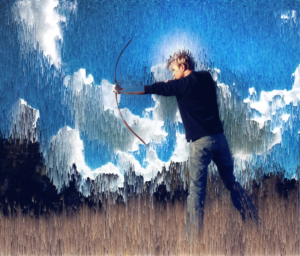 There's lots of debate though about what is the first thing you should approach. Typically the landscape dictates which should come first. For example, if the temperature is sub-zero with a windchill, you might need to focus on fire. If you were lost in a desert environment, you likely would want to focus on water as a top priority. We interviewed survival skills specialist Tom McElroy for a ninja blog. I like his approach in one of his training videos where he sets up a water drip catchment system (from wild grape vines!) and then sets to work on a debris shelter. By time the shelter is done, he's thirsty. And guess what...there's a full bark container of fresh water waiting.
My personal preference for the "sacred order" starts with attitude, or perseverance. In general though, the idea of shelter-first is often a worthy consideration. The thinking behind this is that you can survive for days to weeks without food. You can survive a handful of days without water (depending on the climate and landscape), but you can die of exposure within hours without adequate shelter.
 I remember learning this lesson many years ago when living in Hawaii. I was surfing at a river mouth north of Hilo on the Big Island. There had been a recent storm and lots of cold fresh water was rushing into the small bay where I waited for waves. Within a very short time my whole body was shaking and my fingernails were purple. I kept thinking, "How is this possible? I'm in Hawaii?!" When I tried to unlock my truck later, my hands were shaking so hard that I had a very difficult time getting the key in the slot. As I warmed up with the heater cranking in the front of the truck, I thought about how fast my body can lose heat, even in Hawaii.
Learning to make a debris shelter changed my perspective on how to connect to a landscape, and what I truly needed to survive and be happy. I first learned this skill at a Tom Brown Tracker School course in California. We didn't actually build shelters at the course, but were instructed in the basic technique. The mission was to return to our home turf and try building one. If we returned for the follow-up course, then we would build and sleep in our shelters for an entire week.
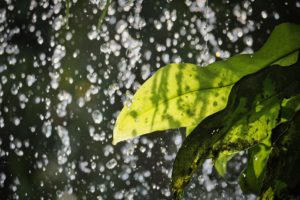 I returned to Hawaii. The location where I opted to try this skill was a friend's property in a native koa forest at an elevation of 4500' on the side of Mauna Loa.It is a wet place. I mean, really wet. It gets over 150 inches of rain some years. I knew it would be a challenge to stay dry and warm (the temperature dipped into the 40's at night).
Despite lots of lush vegetation, the Hawaiian upper elevation wet forest did not provide the most ideal material in the form of debris on the ground. Plant material quickly decomposes under such wet conditions. I remember making an extremely leaky, damp, cold shelter that just wasn't going to work for the night.
I ended up sleeping under a tarp.
I was hungry too because my attempts to find wild edibles were dismal. There are few native plants at that elevation that are sufficient for the human digestive system. I remember falling asleep, hungry, under my tarp wondering how the native Hawaiians made shelter at these elevations in the past. My answer would come a few years later. But that's another story about water and shelter. I'll save that one for later.
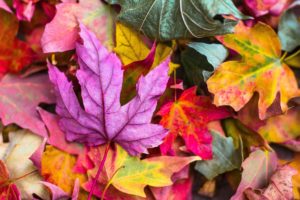 I returned to the Pine Barrens of New Jersey the following year, excited to build a debris shelter at the follow-up survival training course at the Tracker School. It was October and there were dry leaves everywhere! I worked on my shelter for 2-3 days in between lectures and other skills workshops. By time I was done, I had a giant mound of leaves and sticks about five feet high. I had made a door to keep the wind and rain out. I had even woven a reed mat as a sleeping pad. Thinking that the sound of the dawn chorus of birds would wake me, which usually happened in my tent, I went to sleep the first night without setting an alarm. My shelter was so soundproof that the next morning when I crawled out, I realized that I had not only missed breakfast, but the first lecture.
On the third night a huge storm hit. I could faintly detect the sound of thunder from inside my shelter. There was a torrential downpour as well, yet I stayed dry and warm. I didn't need a sleeping bag because of the warmth of all of the leaves.
On the fifth night I decided to sleep in my adjacent tent for comparison. The tent flapped all night long. I remember looking at the thin nylon walls, seeing my breath, and feeling so cold in my sleeping bag. I returned to my debris shelter for the rest of the week and slept happily.
 Sleeping in that debris shelter changed the way I viewed my camping relation to the outdoors. I felt the confidence that I didn't need a sleeping bag or tent, and if needed, I could make a comfortable shelter with just the materials from the forest around me. But most important for me was the deep sense of connection and gratitude– the feeling that the Earth provided me everything I needed for shelter.
Not only was it a really fun, engaging activity of building this structure alone in the forest, but it instilled a deep sense of confidence within me that I liken to the positive attitude that martial arts training teaches. The feeling being– that if the proverbial dooky of doom really hit the fan, and I found myself in a desperate situation without shelter, I knew that I could at a bare minimum build a shelter from the landscape, and be engaged in doing so as a challenge instead of succumbing to panic.
Unless I was at 4500' on Mauna Loa. Then, I'd need another technique. But I digress again...
Since then, I have taught this skill countless times to youth and adults. It's amazing to watch kids build shelters. Go into any forest that abuts a neighborhood and you are likely to encounter piles of ramshackle sticks leaning against trees, a result of local kid's innate drive to build shelters in the forest. There's something deeply embedded within us that resonates with this skill.
At a Wilderness First Responder course, I remember an instructor discussing the idea that a lost child has a better chance of survival than an adult because most young kids have an instinct to seek shelter under bushes or leaves, whereas many adults panic and die of exposure.
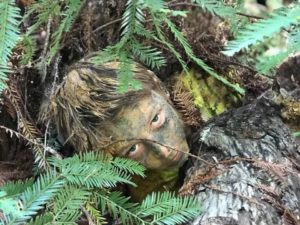
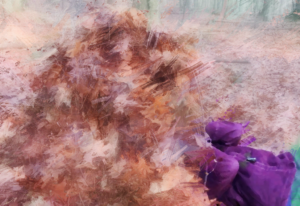 One of our favorite ways to introduce the basics of making a debris shelter is to create a "head shelter." This is a small scale version that incorporates all the essential components of a debris shelter: ridge pole, ribs, lattice, and debris. It's basically big enough to stick your head into.
But, to make it a little more challenging, we throw in the "water test." What?!
The goal is to make a head shelter with enough debris that when a full water bottle is poured over the top, that the person's head inside the shelter stays dry. Or, if you are really brave...go for a gallon jug of water.
Once this shelter is learned, it's simply a matter of scaling up the size to fit an entire body.
This is a great one to do with a pack of ninja kids in the backyard. They especially enjoy pouring the water over the adult shelters.
We also talk about disappearing the shelters when done using them, to return the landscape to its prior condition. A good, sneaky ninja leaves no trace. But sometimes we have used these shelters to stash our dry fire wood on the periphery of our "ninja camps."
Below is a tutorial video showing one way to make the head shelters.
Because we are ninjas, we of course go hiking in the forest and use our hand-made hanbos for the ridge pole. Ninja secret– a full length rokushaku bo makes and awesome full size ridge pole for a debris shelter. But, if you find yourself in the forest without your hanbo or rokushaku bo, a tree branch will work.
Good luck with your head shelter!
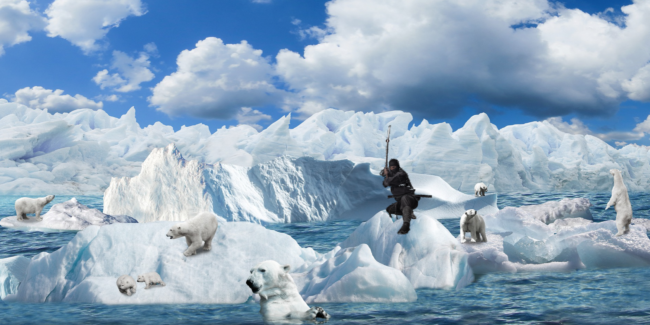
 Brace yourself ninjas. I'm about to bum you out. But if you stick with me, there's rainbow unicorns at the end. I promise.
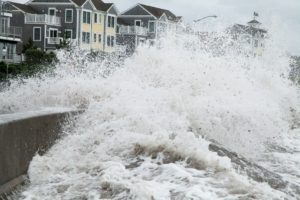 Sui- the waters are rising in the ocean as the glaciers melt, and the rains fall with unseasonable force and frequency.
 I've been closely following the climate science for decades, since my work in the wildlife conservation field began over thirty years ago. I worked with critically endangered birds in Hawaii for many years. Hawaii was and unfortunately still is considered "the endangered species capital of the United States." We are in the midst of what is now considered the
  More recently, there is a new lexicon that has entered the climate change discussion from scientists, policy makers, and the public at large. These discussions include terms such as "tipping point," "the end of growth," "overreach," "collapsology," and even "the extinction of the human species." Many believe we have already passed the tipping point at which we can no longer hold back the devastation and disruption with increasing climate change. This discussion is supported by the fact that increasing average global temperature is no longer a linear progression with CO2 in the atmosphere. In other words, even if we could reverse, or remove the additional CO2 that began increasing with the industrial revolution, the climate would still continue to warm. This non-linear increase is due to things such as reduced solar reflection by snow in the polar regions, increased methane from melting permafrost in the arctic, subsurface oceanic methane release, and changes in the oceanic conveyor belt, to mention a few. There is a very real possibility that we have set things in motion that cannot be stopped at this point.
 We are also on course for the end of growth, meaning when the growth of civilization collides with the end of finite resources, in other words the "collapse of civilization." This is predicted to occur
  A 2018 article
  How prepared are we currently for an economic and ecological societal collapse? More than 95% of the food coming into the major cities in our country arrives by long-distance trucking. If this ceased, it is estimated that New York would have a four day supply of food. Los Angeles would have three days of food. In 1880, 50% of Americans were farmers. Today, that number is less than 2%. In 1945, Americans grew 40% of their food in backyard gardens. That number is now less than 0.1%. This is homeland insecurity. I wonder how many Americans today can identify a single wild edible plant? How many know the ubiquitous edible "weeds" in their yards, that they kill with glyphosate herbicides at the cost to their own fertility and health? As I look out my kitchen window during the winter, I ask myself— how can I expand and grow more? What new wild edibles can I learn and find in the nearby forests?
 These realizations, however, have given me an awakened perspective on the value and role of the art of the ninja when faced with the possibility of collapse. If you examine historical examples of societal collapse, wars or social unrest typically precede or follow the downfall of civilizations. While actually having to defend yourself or others when faced with unrest might be a real matter worthy of discussion, there is a deeper value that I find in the art. The essence of perseverance, or the meaning of "nin," is at the heart of what motivates me daily when I wake. What am I going to do today, to take a necessary step towards adapting to the unknown that lies on the horizon? I have been teaching survival skills for years. Beyond shelter, water, fire, and food, we teach that attitude is the most important survival skill. If you give up, and admit defeat in the face of doom, then you most likely will fail. Remembering to embody the spirit of "nin" is thus essential to survival.
 I posed this question to Dai Shihan Mark Roemke regarding this topic: How does the art of the ninja relate to an uncertain future of disruption on our planet? Here is his response.
 Beyond my garden, I think about my own kids and the youth I have encountered with the programs I teach. I realize that to simply hope that our governments and corporations can figure out a solution to climate change while continuing "business as usual" is not only foolish, but does an extreme disservice to the youth of today and the future generations. If I make it to 2045, I'll be firmly in my elder years. My kids, grandkids, or great grandkids (if there are still enough viable sperm and eggs by then) will be the ones facing the brunt of this trajectory. There's a song that I love that has the words that speak to this:
 I also have a new perspective on the large volume of skills that we have put together for youth with our Ninjas in Nature program. I used to view them primarily as a means to help someone connect deeply to nature, while building powerful self sufficiency, awareness, and self confidence through the martial arts skills. Connect someone deeply to nature, and they will want to save it was once the standard mantra. The end result was a truly happy and whole being, with a desire to preserve nature, and still is. Unfortunately, the pragmatist and former Boys Scout in me remembers the old motto: "be prepared." How to prepare for an uncertain future, with no template from history to go by, is at the core of this challenge for me.
 But now I see these skills as essential tools for adapting to the unknown change and disruptions to be faced by the inhabitants of our planet. It's not just the confidence of knowing how to find and process acorns as a vital protein source should the shipping trucks cease to show up, or how to make a fire by friction if the electricity goes down. It's about how to tap into the spirit of perseverance.
 Over 98% of all life that has ever lived on this planet has gone extinct. Think about that. The deck was stacked against us as a species long before we ever appeared on this planet. There have been five major extinction events in the history of planet Earth, and we likely are driving the current extinction bus blindly towards the precipice of the sixth. Still, after every major extinction event, something more beautiful evolved in the aftermath. Dinosaurs and ferns were pretty cool, but the mammals and flowering plants that followed were much more beautiful. I know. I'm a biased mammal. Still, I think the photographers and landscape artists are on my side. While this may sound like a nihilistic doomsday perspective, I find solace in stepping back to look at the wide angle vision, long view of our human time on Earth, and our collective connection to the mystery that holds this tapestry together. There is a beauty to this mystery that we are part of. One definition that I heard recently for "love" is a state of consciousness that is an awareness of beauty. I love the mystery.